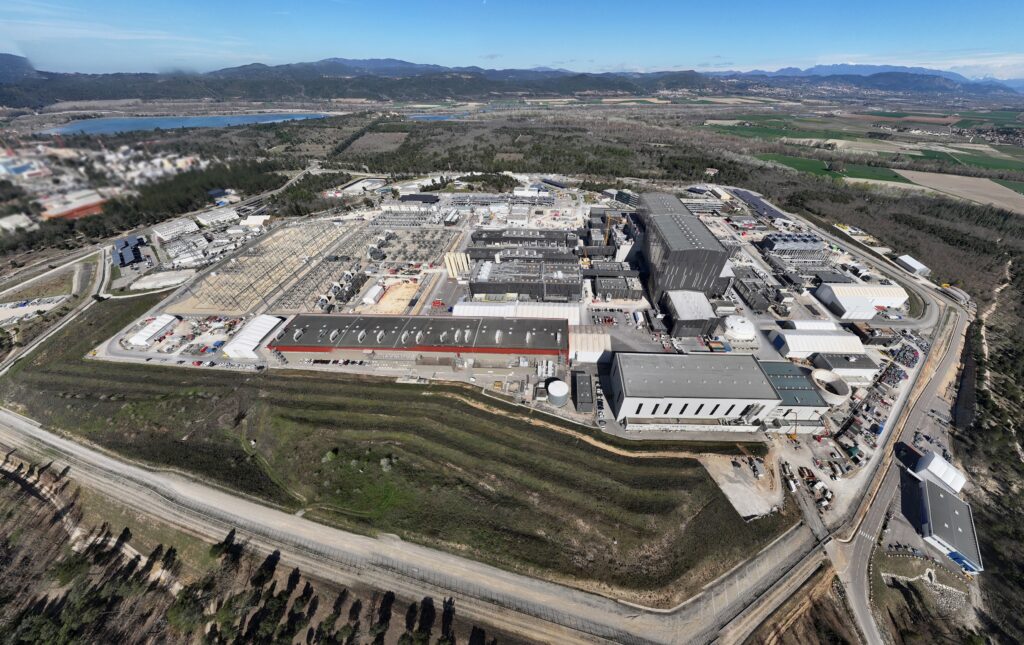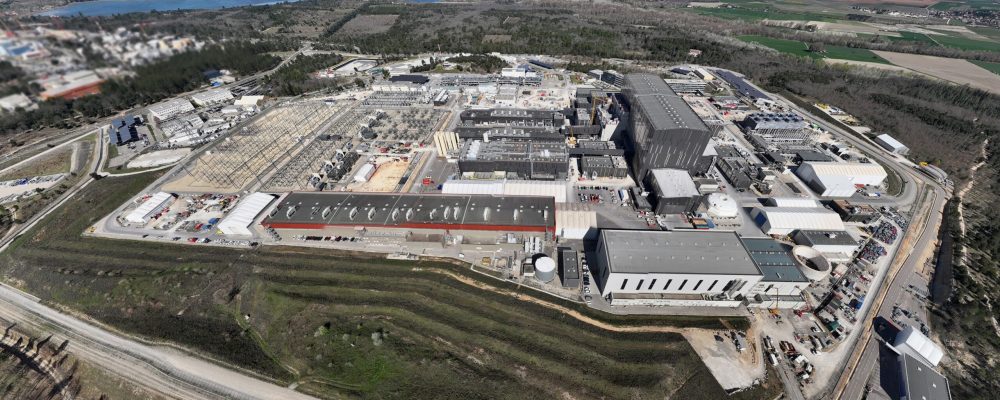
In a pioneering project, Optics11 has developed and qualified 12 radiation-hardened fiber-optic acoustic emission sensors to monitor the structural health of Europe’s largest fusion reactor in Saint-Paul-lès-Durance, France.
Purpose-built for one of the most challenging operating environments, the sensors are capable of withstanding the extreme, high-stress demands of the reactor, while delivering the sensitivity needed to monitor its critical structures. Their successful development and qualification demonstrate Optics11’s ability to adapt fiber-optic sensing technology to highly specialized applications, showcasing our engineering expertise and uncompromising approach to quality and safety.
The final stage of sensor qualification, comprising on-site SAT sector trials, was completed in December 2025. The first of three sector installations was completed in May 2026 and subsequently verified through performance checks and Pencil Lead Break (PLB) testing.
After undergoing an extensive validation process, including radiation and magnetic testing, the sensors were successfully deployed. This marks a milestone moment in Optics11’s five-year collaboration with the ITER Organization, a global scientific initiative constructing the world’s largest tokamak to demonstrate the feasibility of nuclear fusion as a practical power source.
On a mission to generate sustainable, non-carbon emitting energy, the international program has integrated thousands of technology providers, engineers, and scientists. The organization itself has existed since 2007, the idea of the project dates back to 1985, and currently, there are 7 members representing 34 countries to advance fusion science and pave the way for fusion power plants.
Purpose-built for extreme environments
The biggest challenge faced by Optics11 was to purpose-build sensor components capable of withstanding the extreme, high-stress demands of the reactor, while adhering to stringent quality and safety requirements and meeting ITER standards.
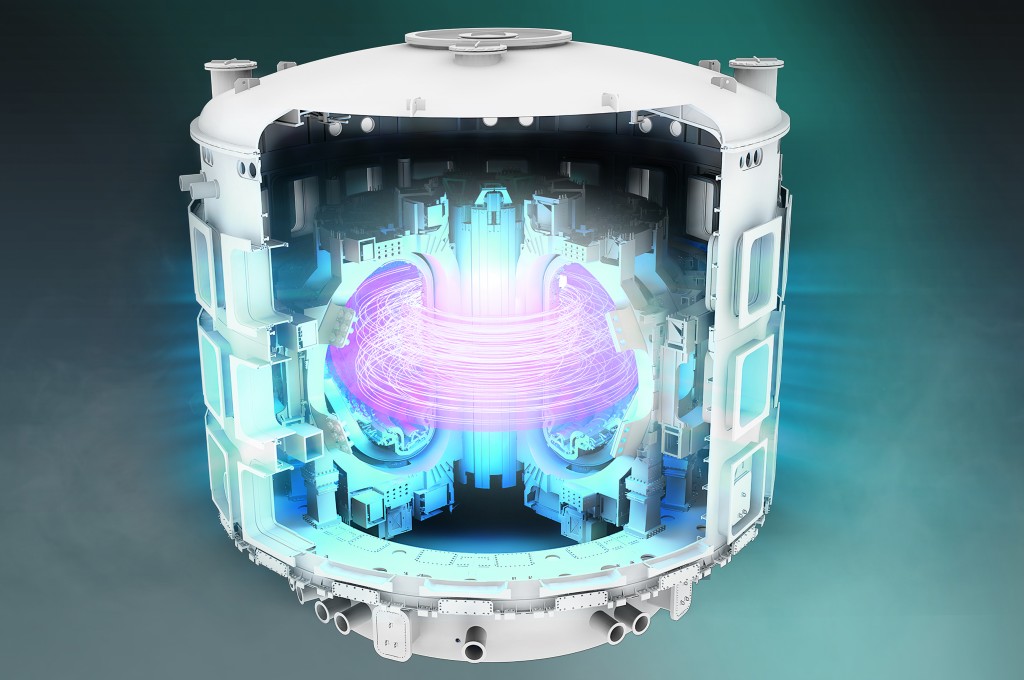
Designed to operate in the tokamak’s harsh radiation conditions, high-vacuum environment, and intense electromagnetic fields, the acoustic emission sensors developed and deployed monitor critical structural areas of the installation at their most sensitive points, including the outer hall.
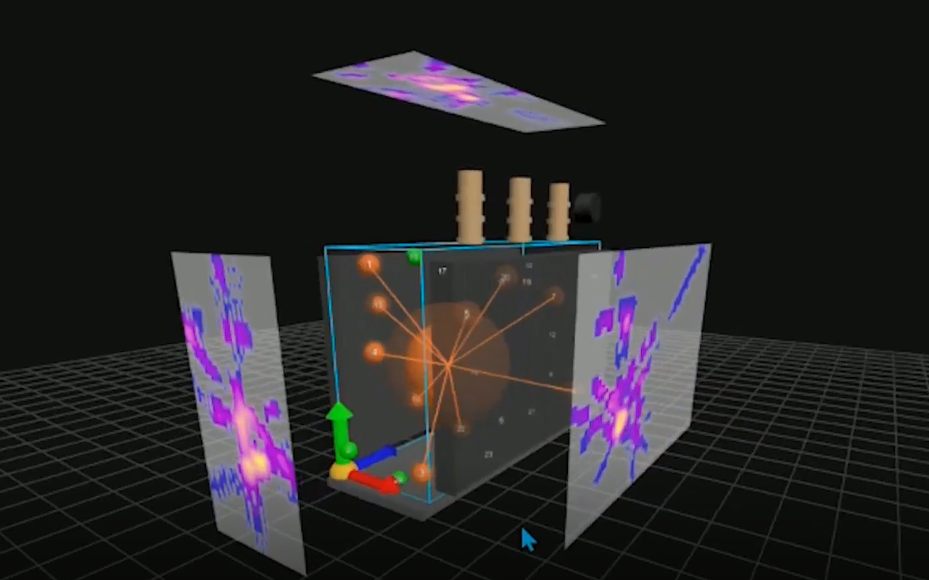
As part of ITER’s mission-critical Acoustic Emission Monitoring System (AEMS), the fiber-optic sensors are intrinsically immune to electromagnetic interference – unlike piezoelectric sensors – and provide structural health monitoring by detecting cracks at the weakest points of the structure, namely the upper ports, where vacuum is applied to the cryostat.
With a total of 12 sensors deployed – organized as three sets of four and connected to a single interrogator – each installation uses 51 meters of specialized, radiation-hardened fiber to withstand extreme neutron and gamma exposure, with no observable signal degradation.
For signal processing and system diagnostics, Optics11 utilizes its advanced software platforms to perform signal-, spectral-, and frequency-domain analysis, ensuring system performance is continuously aligned with the tokamak environment.
“The unique challenges posed by the hostile environment of the tokamak meant our team needed to engineer with innovation,” said Francisco Javier Canada Palmero, System Lead, Energy Sector at Optics11 and Technical Manager for the ITER project. “Building on our existing fiber-optic sensing technology, we deliver a robust solution with uncompromising integrity.”
A project years in the making
Optics11 has been collaborating with ITER since 2021, when the advanced fiber-optic sensing company was brought onto the project as a back-up technology provider by The Welding Institute (TWI), a UK-based research organization specializing in materials and structural integrity.
The first three and a half years focused on sensor design and qualification testing, including radiation, magnetic field, and temperature trials. During this phase, it became clear that piezoelectric sensors, which are not part of Optics11’s portfolio, were less suitable for the extreme environment. Optics11’s fiber-optic solution emerged as the preferred technology option, far outperforming expectations.
In December 2025, the team conducted successful simulation tests on a vertical sector of the reactor, to verify the sensors were effective on the real surface. In May 2026, the first of a three-phase installation plan was completed, with verification results showing strong signal integrity and reliable detection under operational conditions.
“Managing complex hardware-software deployments in highly regulated, extreme environments requires an uncompromising approach to quality and safety,” said Debasish Nayak, Project Manager at Optics11. “I am incredibly proud that our team achieved full compliance with all stringent technical specifications and nuclear safety standards during this deployment phase.”
The future of fiber-optic monitoring in fusion
With the deployment of Optics11’s acoustic emission sensors in collaboration with ITER, purpose-built fiber-optic sensing technology has demonstrated its ability to operate in extreme fusion environments, while meeting the most stringent operational and safety requirements.
This milestone brings ITER one step closer to demonstrating the feasibility of clean energy from fusion, while opening the door for fiber-optic sensing applications in future fusion infrastructure – enabling higher measurement fidelity, improved safety, and robust performance in environments that demand highly sensitive monitoring under extreme conditions.
Interested in learning more about Optics11’s sensor solutions for the energy market? OptiFinder is an end-to-end fiber-optic partial discharge (PD) monitoring and localization system that uses acoustic emission sensors to detect and locate faults in high-voltage assets.
Find out exactly how it works and the positive impact it can have on your everyday operations here.
About OPTICS11
Founded in 2011, OPTICS11 is a Dutch deep technology company and the developer of the world’s most sensitive passive fibre optic sensing array, capable of detecting and classifying underwater targets, even up to 100 kilometres from the shoreline. Led by CEO Paul Heiden, the Company has transformed more than a decade of pioneering scientific research, following its spin-out from Vrije Universiteit Amsterdam, into operational products that help governments, navies, utilities and infrastructure operators detect threats earlier, strengthen resilience and make better decisions. Its pioneering technology has been selected by the Dutch Government to support the next generation of maritime surveillance and critical infrastructure protection.
Its portfolio includes OptiBarrier, a static passive fibre optic sensing seabed-placed system providing persistent, long-range protection for ports, offshore wind farms, subsea cables and other critical maritime infrastructure; OptiArray, a next-generation fibre optic towed array delivering advanced underwater awareness for naval platforms; and OptiFinder, a fibre optic monitoring solution that detects the earliest signs of failure or partial discharge within high-voltage electrical infrastructure.
By replacing conventional electrical sensing with passive fibre optic technology, OPTICS11 delivers richer data, earlier detection and greater operational confidence across some of the world’s most demanding environments. As autonomous threats become more sophisticated and critical infrastructure becomes increasingly contested, the Company is helping redefine how nations monitor, protect and secure the systems society depends upon.