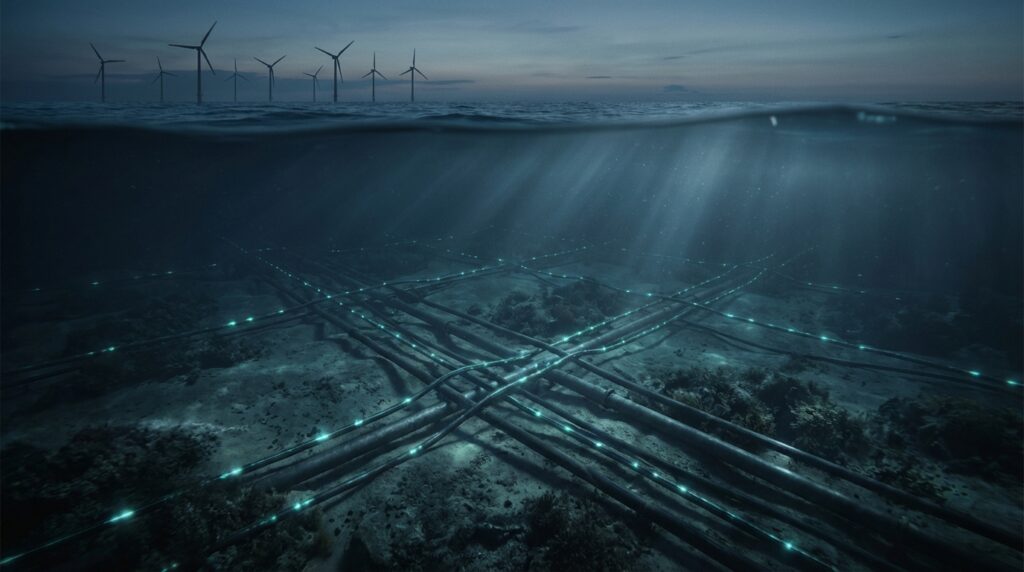

In a recent BBC article “Subsea fibre cables can ‘listen out’ for sabotage“, Chris Baraniuk discusses protecting underwater networks and subsea infrastructure. Optics11’s CEO, Paul Heiden gave his perspective on this important topic. In today’s digital world, underwater communication cables are the backbone of global connectivity. These cables run along the ocean floor, carry over 95% of the world’s internet and data traffic. Their importance is critical to everything from business operations to national security.
But here’s the problem, these cables are vulnerable. They can be damaged by accidents, natural events, or even deliberate attacks, leading to disruptions. A case from 2024 highlighted this risk when a telecom cable between Finland and Germany was cut. It sparked concerns about how well we are protecting these vital networks.
How Is the Industry Responding?
To address these threats, NATO has launched the “Baltic Sentry” mission, which deploys warships, aircraft, and drones to keep an eye on critical undersea infrastructure. But military presence alone isn’t enough, better monitoring technology is needed to detect risks early and prevent damage before it happens.
That’s where advanced fiber-optic sensing comes in. Some companies are using fiber-optic cables to monitor disturbances along the seafloor. These systems can detect underwater activity, such as drones or ships moving nearby, by analyzing tiny changes in the light that travels through the fiber. However, the technology has its limits. Usually, it can only monitor certain distances and requires additional equipment to be installed at multiple locations.
Optics11’s Solution: OptiBarrier
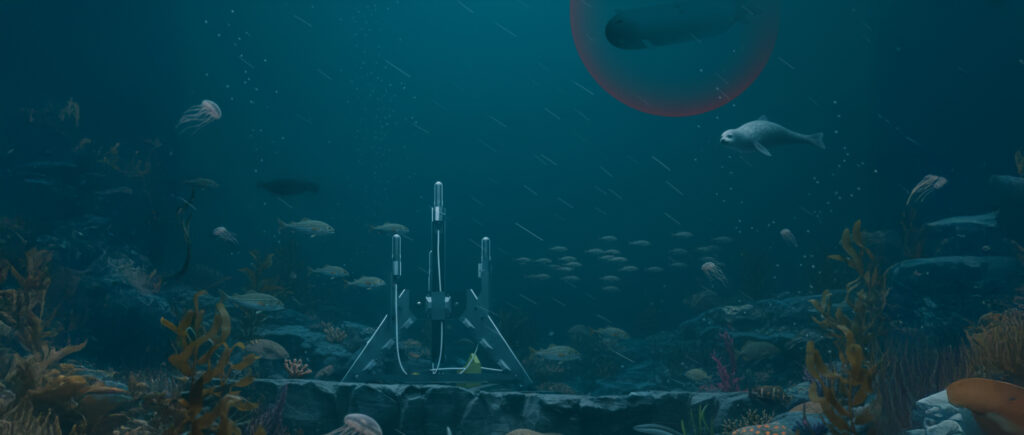
This is where Optics11’s technology stands out. Our OptiBarrier system is designed specifically for wide-area seabed monitoring away from the shore. It offers a highly sensitive, real-time detection system for underwater threats far offshore. Unlike other solutions, OptiBarrier doesn’t rely on power at the sensing location, making it highly efficient and easier to deploy over large areas (over 100 kms).
With OptiBarrier, operators can:
– Detect and localize underwater threats such as vessels or tampering attempts
– Monitor large seabed areas far away offshore (over 100kms) with high precision
– Receive real-time alerts on potential risks
As Paul Heiden, CEO of Optics11, explains, early detection is key to preventing damage to these critical infrastructures. “The ability to monitor vast underwater areas in real time is essential for securing our global communication networks,” he says.
The Future of Underwater Monitoring
While military patrols and fiber-optic sensing provide some level of security, the industry needs smarter, more scalable solutions to keep our subsea infrastructure safe. Technologies like OptiBarrier represent the next step in ensuring that underwater cables remain protected from both accidental and intentional threats.
Read Full article from BBC: Subsea fibre cables can ‘listen out’ for sabotage