What the latest cable incident tells us, and how to fix it for good.
The problem isn’t new. The response must be.
Undersea infrastructure, telecom cables, power interconnectors, and pipelines, has become a front line of hybrid competition. Europe has already seen pipeline sabotage, cable damage, and a stream of “accidental” cuts. Each event turns into connectivity loss, costly repairs, and heightened political risk, a pattern our market analysis tracks across the Baltic, North Sea, Mediterranean and Black Sea theaters. Incidents in strategic sea lanes simply compress that risk into a single chokepoint. The takeaway is blunt: we need persistent, real‑time underwater surveillance that works in all weather, over large areas, and far from shore. That is precisely the gap OptiBarrier was built to close.
What actually threatens subsea infrastructure (by sea area)
- Baltic Sea — shallow, crowded, and politically tense. Threats range from covert interference near interconnectors and pipelines to dragged anchors and unmanned systems transiting narrows.
- North Sea — the world’s densest energy corridor. Mega‑projects (offshore wind hubs, energy islands, HVDC spines) multiply the attack surface. Several North Sea states now mandate or plan continuous surveillance of critical subsea assets.
- Mediterranean — wide‑area traffic and choke points. Strategic straits, new interconnectors, and offshore gas platforms create long linear corridors to guard.
- Black Sea — contested and dynamic. Naval modernization and uncrewed systems are accelerating. Fixed, passive sensing that endures in high‑noise littorals complements patrol craft with a 24/7 tripwire near ports, terminals, and cable/pipeline approaches.
- Atlantic approaches — trans‑regional cable landings. Multiple landfalls mean many places for “quiet” tampering. Early detection near landing corridors prevents small incidents becoming regional outages.
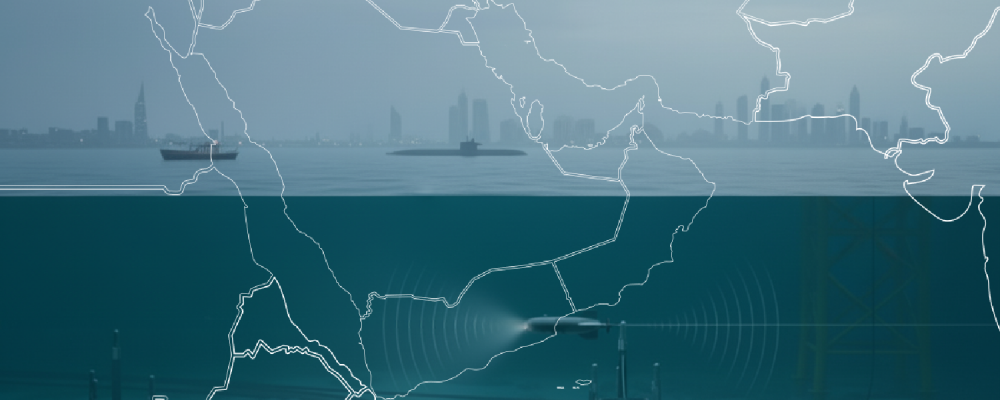
Middle East & Red Sea, critical chokepoints under strain
- Red Sea and Bab al‑Mandeb Strait. A narrow, high‑traffic corridor where multiple long‑haul cables and energy routes pass close to shore and anchorage zones. Risks include anchor drags, covert tampering, and uncrewed system transits in congested lanes.
OptiBarrier’s role: persistent, passive detection across chokepoints to give navies and coast guards early warning before cables or energy corridors are hit, with real‑time bearings and tracks to cue interceptors. - Suez Canal approaches (Egypt). A critical landfall cluster for Europe–Asia connectivity exposed to dense shipping and complex pilotage. Accidental strikes and hybrid interference can escalate quickly.
OptiBarrier’s role: guarding approach corridors and landing‑station “funnels,” enabling operators to trigger redundancy plans and coordinate a timely response with maritime authorities. - Persian Gulf (Saudi Arabia, UAE, Qatar, Bahrain, Oman). Shallow waters and a dense web of oil and gas pipelines, power interconnectors, and subsea telecoms increase exposure to anchor drags, cyber‑physical interference, and drone or UUV incursions.
OptiBarrier’s role: a wide‑area seabed mesh around energy terminals, subsea pipelines, and cable corridors that delivers over‑the‑horizon detection and real‑time cueing to naval or coast‑guard assets. - Eastern Mediterranean (Lebanon, Cyprus, Türkiye). Offshore gas fields and export routes concentrate strategic value in compact areas. Threats include diver incursions, UUV surveillance, and pipeline sabotage attempts.
OptiBarrier’s role: covert seabed surveillance to protect platforms, pipeline landfalls, and naval base approaches, complementing patrol craft and aerial assets with a 24/7 acoustic tripwire.
Why the usual answers fall short (and why DAS isn’t the fix)
A common reflex is to “turn the existing fibre into a sensor” via DAS (Distributed Acoustic Sensing). It’s attractive on paper; in practice, DAS struggles where today’s threat lives:
- Bandwidth collapses with distance. OptiBarrier maintains 1 MHz sampling rate even beyond 100 km; DAS drops from ~5 kHz at 10 km to ~500 Hz at 100 km.
- Too noisy for subtle signals. Each OptiBarrier hydrophone sits below Sea‑State‑0 noise; DAS is tens of dB noisier.
- Not real time. DAS often averages for seconds to minutes to lower noise. OptiBarrier delivers instantaneous alarms.
- Coverage gaps. OptiBarrier pods are omnidirectional; DAS senses along the cable axis only.
- Burial kills performance. DAS degrades sharply once fibres are armoured or silted. OptiBarrier pods sit above the seabed.
- Classification limits. OptiBarrier captures 10 Hz–10 kHz for full sonar‑AI processing. DAS’s 70–700 Hz passband rarely suffices.
If we want early, actionable warning, and not just a post‑mortem trace, DAS isn’t the answer.
What does work: a passive, prime‑led seabed “fence”
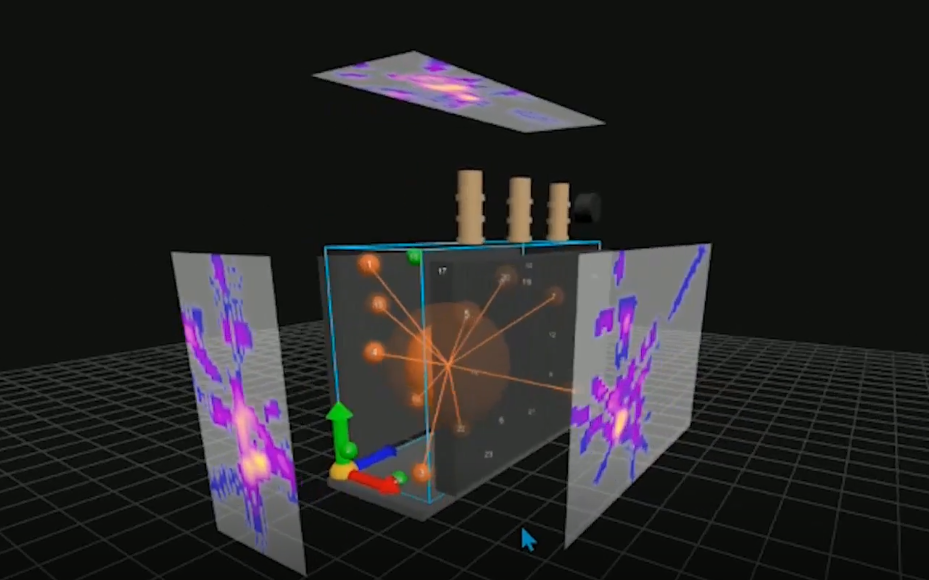
OptiBarrier is a fully passive fibre‑optic hydrophone network with no electronics in the wet end. Pods sit quietly on tripods on the seabed; a shore‑side interrogator digitizes and fuses the acoustic field from many pods in real time. The result: over‑the‑horizon detection (>100 km), 24/7 persistence, and wide‑area coverage with a single return cable to shore.
- Performance not limited by distance.
- Reliability: no wet electronics, long service life.
- Real‑time alarms from high SNR, 1 MHz oversampling.
- Scalable mesh: synchronised interrogators support dozens of pods.
OptiBarrier is delivered via a single‑contract consortium, with proven European primes leading integration, installation, cabling, and accredited operator software, while Optics11 provides the sensing core.
A deployment blueprint for cable corridors
- Map the risk. Incidents, AIS traffic, and bathymetry drive placement. Our modular analysis service supports this.
- Lay a passive picket line. Pods kilometres offshore stream data live to shore via a single fibre.
- Fuse and classify. Wide‑band acoustic data supports bearing‑time plots, tracks, and classification.
- Cue mobile assets. Vector patrol boats, USVs/UUVs, or aircraft only when needed.
- Scale out. Add pods for a wider mesh; cheaper than adding sorties.
Quick answers for common objections
“Why not just DAS?” Sample‑rate collapse, noise, blind spots.
“Electrical nodes are cheaper.” Wet‑end electronics mean higher failure rates and OPEX.
“Drones can watch it.” Weather‑limited, visible, and non‑persistent. OptiBarrier never sleeps.
“Will it spam false alarms?” Clean SNR plus multi‑pod correlation and operator QC reduces nuisance alerts.
Why Europe can move fast right now
Legislation is aligning with reality. EU CER/NIS2 transpositions and national laws now create binding obligations for resilience and physical monitoring of subsea grids and cables. Budgets are shifting from “nice‑to‑have” to “must‑do,” favouring accredited, prime‑led solutions.
What to do this quarter
- Pick one high‑risk corridor and run a rapid pod placement study.
- Contract under the prime‑led model, one SOW, one acceptance plan, one security posture.
- Integrate alarms into command systems and rehearse cue‑to‑intercept loops.
Cable‑cut incidents are no longer anomalies; they’re predictable stress tests of our seabed economy. The answer isn’t to stare harder at legacy fibres or launch more drones. It’s to plant a silent, prime‑delivered acoustic fence that hears trouble before it arrives, and buys the time to stop it.