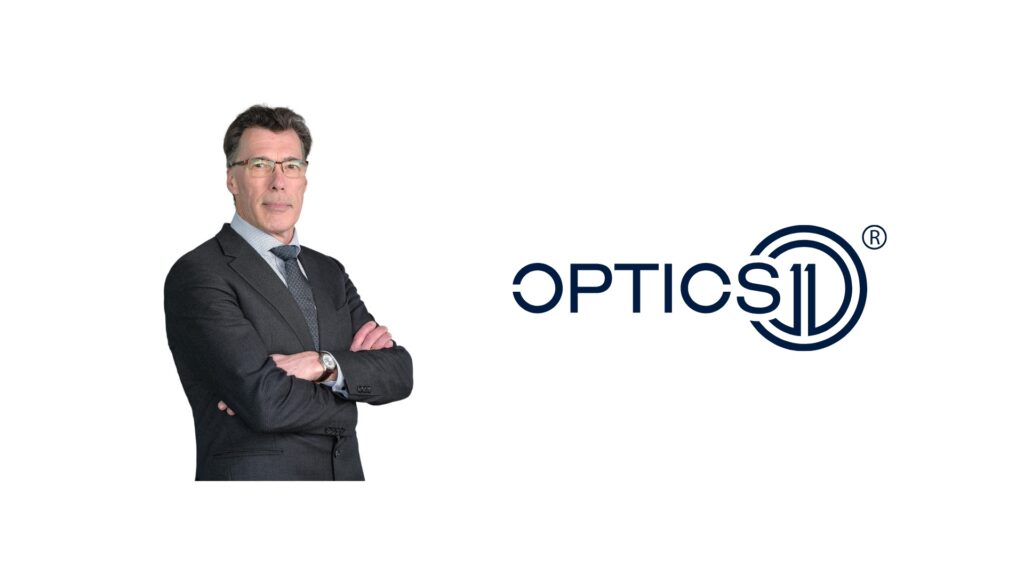


About Coco Geluk
As Managing Director at Optics11, Geluk works closely with transformer OEMs across Europe and beyond, enabling them to act faster and to make uncertainty in the FAT process manageable. He regularly speaks with COOs and General Managers responsible for throughput, delivery reliability, and operational predictability.
Transformer manufacturing is under unprecedented pressure. Demand is rising, delivery windows are tightening, and specialist expertise is increasingly scarce. In this environment, keeping production moving is as critical as product quality itself.
“When something goes wrong, the disruption rarely stems from the fault itself,” Geluk says. “It starts when the organization pauses and tries to figure out where to act.”
Yet many organizations still underestimate where delays truly originate. The most disruptive moments rarely come from a defect itself, but from what happens after it is detected. When teams cannot quickly determine where to act, uncertainty spreads through planning, resource allocation, and delivery commitments.
Few people see this pattern as clearly as Coco Geluk.
Why failure is only the start of the problem?
Partial discharge is a familiar phenomenon in transformer manufacturing. It is anticipated, tested for, and addressed through established procedures. From a technical standpoint, its occurrence is rarely a surprise but the problem is that you cannot predict when it occurs and where it sits inside the transformer.
The disruption begins after detection. Once partial discharge is identified during a factory acceptance test, the transformer cannot move forward, but it cannot yet be repaired. Until the source is localized, the unit effectively sits in limbo.
Specialists are called in; test bays remain occupied; factory schedules are revisited without reliable estimates for release, and most important, customers will not be able to install their new transformer. What begins as a technical issue quickly becomes an operational bottleneck.
“Most OEMs know how to deal with failure,” Geluk explains. “What slows them down is uncertainty after detection, when it’s not yet clear where the problem originates.”
That uncertainty matters because repair cannot begin without precise localization.
“You can only repair what you can locate,” Geluk says. “And localization is often the longest and least predictable part of the process.”
From diagnostics to decision-grade clarity
Transformer OEMs are highly capable when it comes to diagnostics. They can confirm whether partial discharge is present and comply with applicable standards, typically through electrical measurement in line with IEC 60270. This confirms that PD is present, but not where it originates.
Adding more measurements does not necessarily reduce uncertainty. More data still requires interpretation and alignment, while the underlying decision remains blocked.
“Clarity is not about having all the data,” Geluk explains. “It’s about having the right information to act with confidence.” In this context, clarity means decision-grade localization: knowing where the issue sits so teams can commit to action and move forward under pressure. Some OEMs are already shortening this uncertainty window.
“We see that when organizations can localize partial discharge to a defined area, often on the order of a drink coaster, within 24 to 48 hours, the entire dynamic changes,” he says. “Specialists stop debating and start acting.”
One example of this shift is OptiFender ExpertHub, developed by Optics11, which supports precise localization after PD has been detected through standard factory acceptance testing.
What strong manufacturers do differently
In Geluk’s experience, the strongest operations leaders focus on flow and pace of execution. They design processes to reduce the time between detection and action to make uncertainty manageable. They are also acutely aware of how scarce specialist expertise is deployed.
“If a specialist is tied up for weeks on one investigation, everything else waits,” Geluk says. “That’s where throughput really suffers.”
Executional confidence is about committing earlier, aligning teams faster, and avoiding repeated cycles of uncertainty.
Looking ahead: operational excellence as the new standard
Pressure on transformer manufacturing is unlikely to ease. Demand will continue to grow, delivery expectations will tighten further, and specialist expertise will remain scarce. Failures will not disappear. What will change is how organizations respond when they occur.
“Today, many organizations still accept that locating the source of a problem can take weeks,” Geluk says. “In the future, that will no longer be acceptable.”
As localization becomes faster and more precise, expectations across the value chain are already shifting. What was once seen as an unavoidable investigation phase is increasingly viewed as a preventable delay. In factory acceptance settings involving large global OEMs, expectations around speed and certainty are changing.
This shift will change how factories are run. Test bays will no longer serve as buffers for investigation. Specialists will be deployed deliberately. Throughput planning will become more reliable.
“Executional confidence becomes the standard,” Geluk explains. “Not because failures stop happening, but because organizations know exactly where they stand as soon as something is detected.”
The question many COOs and GMs are now facing is no longer whether uncertainty is costly, but how long their organization can afford to accept it.
That question deserves a conversation.
About Optics11
Optics11 is the world leader in fiber-optic sensing technology for ultra-sensitive early warning systems. Established in 2011 and operating from the Netherlands, a country renowned for high-tech industry, Optics11 works passionately to help protect our energy supply against disruption. Optics11 is dedicated to fulfilling the measurement requirements of Transformer OEMs, Transmission System Operators, and Power Generators. They produce the most advanced optical fiber sensing solutions for accurate PD measurement in the most demanding settings.